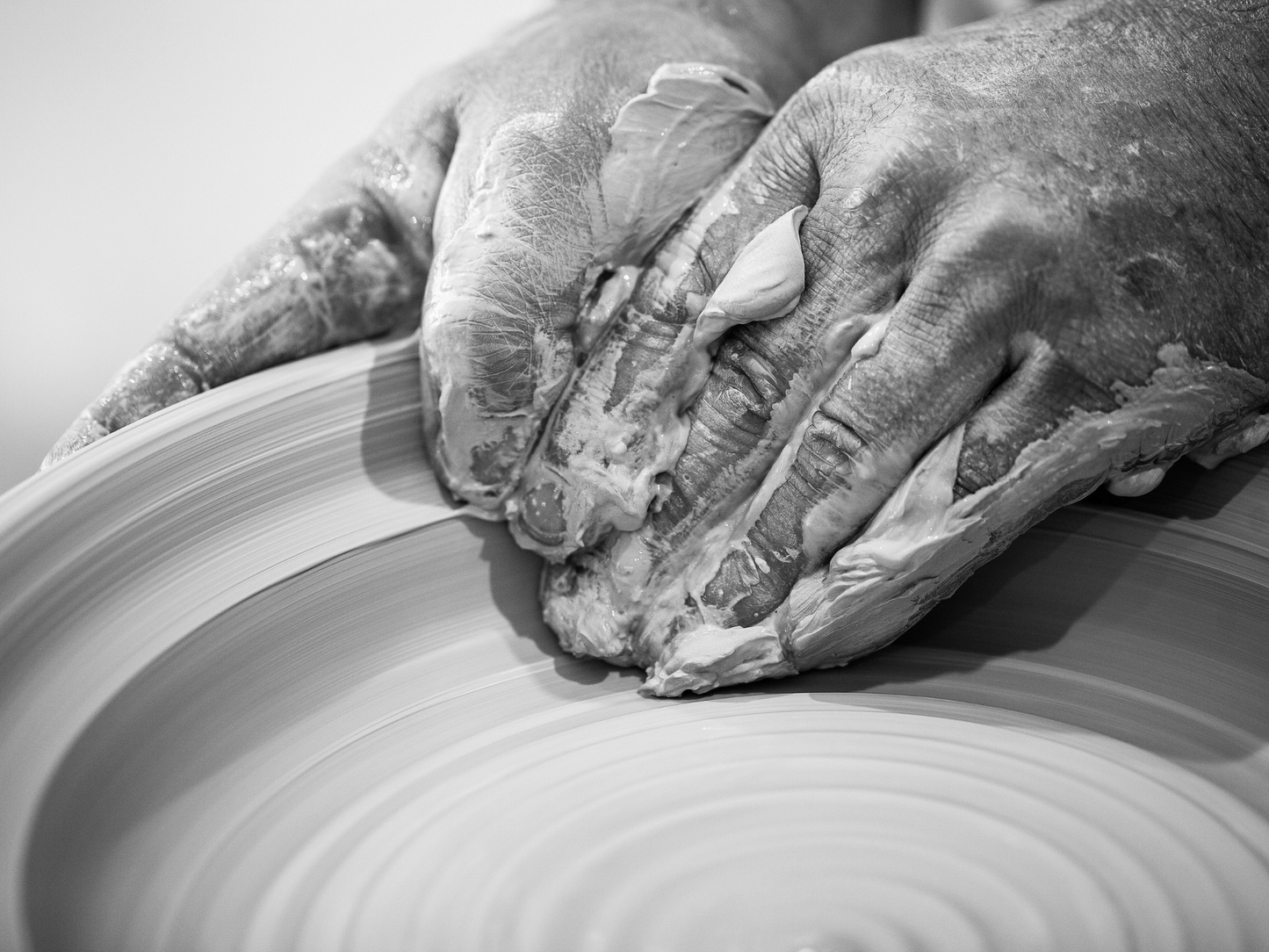
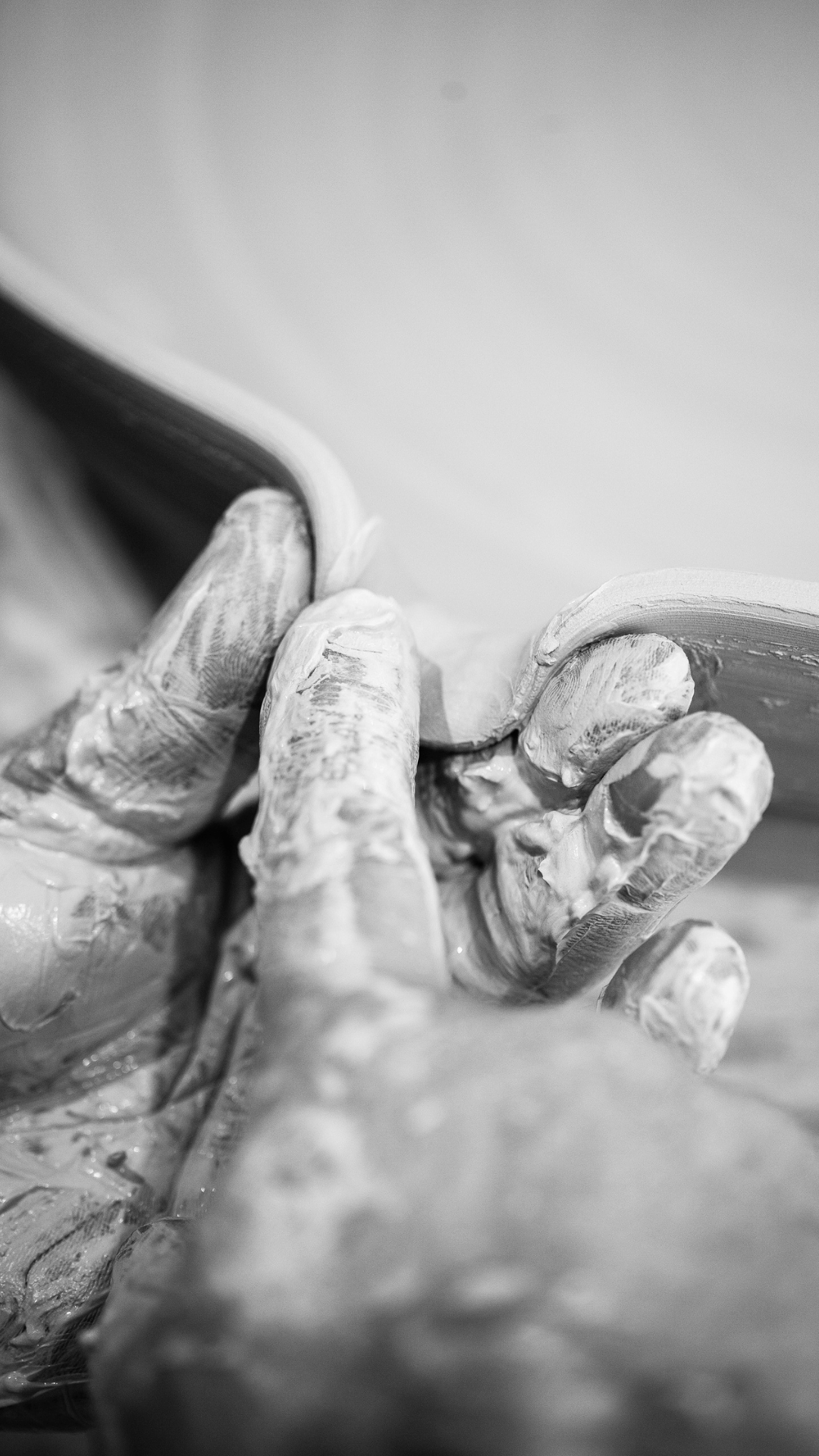
The work originates from Stärkelsefabriken, where buildings and gardens will evolve over time.
Here, larger ceramic objects take shape in relation to the site, the water, and the garden.


What is happening now
A series of larger stoneware pots are currently being produced for the site's various environments.
Some are shaped to stand in water, others for outdoor environments near stone, vegetation, and open spaces.
The large formats require time, precision, and control throughout the entire process.

Stärkelsefabriken
At Stärkelsefabriken, materials such as concrete, wood, stone, and vegetation are given space to age over time.
The pots are shaped to become part of the environment around the natural pool and the garden's open spaces.
The raw and stark feel of Stärkelsefabriken meets a softer, more organic design language.
It is in this tension that the objects take shape.


The collaboration between Paradisverkstaden and Gustav Ovland is based on a place undergoing change. Along the open landscape outside Åhus lies Stärkelsefabriken, surrounded by fields that change with the seasons. Here, long-term work is underway, where buildings, garden, and surroundings are gradually taken care of and given a new direction, with great respect for what already exists.
In his search for ceramic pots that could express the essence of the place and simultaneously meet high functional demands, Gustav did not find what he was looking for. This led to Paradisverkstaden on Öland, where the opportunity to develop something specific for the location took shape.
The commission includes larger stoneware objects, designed for both water and outdoor environments. Some of the pots are submerged in the newly built, concrete-cast pool and planted with water lilies. Others are placed in the garden's open spaces, where they have a clear presence and interact with vegetation and architecture.
The work has evolved through close dialogue. Gustav has visited the workshop and studio on Öland on several occasions, participating in the process from idea to finished form. Discussions have ranged from function to aesthetics, from the needs of the place to the properties of the material.
In the encounter between clay, water, and time, a deeper understanding emerges of what ceramics can convey, both visually and practically. The result is not a series of standard objects, but a collection of forms created for a specific environment, with great care at every step.
There is also a tension in the meeting of expressions. The straight, raw character of Stärkelsefabriken, where traces of work and history are preserved, is contrasted with the ceramics from Paradisverkstaden with their softer, more organic forms. In this encounter, something emerges that does not seek to smooth out, but rather to amplify the differences and allow them to work together.